Understanding the Value of Vector Art of Boat Illustration for Design Projects
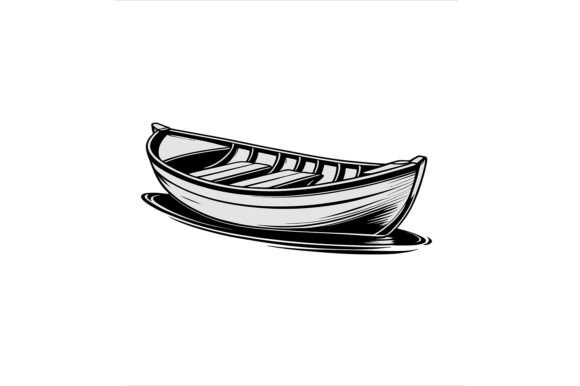
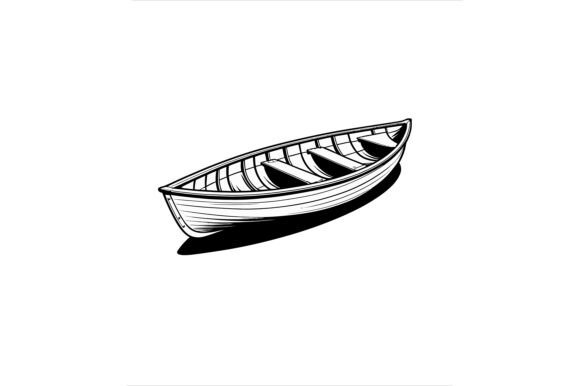
In the realm of graphic design, the choice between raster and vector formats often dictates the longevity and versatility of a final product. When working with nautical themes, marine branding, or coastal aesthetics, a Vector Art of Boat Illustration offers distinct advantages that raster images simply cannot match. This format is not merely a picture of a vessel; it is a mathematical construct of points, lines, and curves that defines shapes. For designers, illustrators, and creative entrepreneurs, understanding the mechanics and applications of this specific asset type is crucial for making informed decisions about resource allocation and project scalability.
The core distinction of a vector illustration lies in its resolution independence. Unlike JPEGs or PNGs, which are composed of a fixed grid of pixels, a vector file describes geometry. This means that a boat illustration created in vector software can be scaled from the size of a postage stamp to a billboard without any loss of clarity or introduction of pixelation. This property makes the Vector Art of Boat Illustration an essential tool for projects where output dimensions may vary significantly during the production phase.
Evaluating Format Flexibility: EPS vs. Raster Alternatives
When comparing file formats for design assets, the trade-offs become immediately apparent. The primary alternative to vector art is the raster image, such as the included high-resolution JPEG often bundled with vector packages. While a JPEG is excellent for immediate web use or quick previews, it lacks the structural flexibility required for professional print work. If a designer attempts to enlarge a raster boat image beyond its original resolution, the result is a blurry, jagged mess known as aliasing. In contrast, the EPS (Encapsulated PostScript) format ensures that every curve of the hull and every detail of the rigging remains crisp at any scale.
However, this flexibility comes with considerations regarding software compatibility and workflow. To fully utilize the editable nature of a Vector Art of Boat Illustration, access to vector editing software is necessary. Tools like Adobe Illustrator, CorelDRAW, or open-source alternatives like Inkscape are required to manipulate the paths and nodes. If a user's workflow relies solely on photo-editing software like Photoshop or simple layout tools, the vector file may need to be imported as a linked object or converted to a smart object, which limits direct editing capabilities. Therefore, while the vector format offers superior technical quality, it demands a specific skill set and software environment to unlock its full potential.
Furthermore, the inclusion of both EPS and JPEG files in a standard package addresses different stages of the design process. The JPEG serves as a low-fidelity prototype for client presentations or social media teasers, allowing for rapid iteration without heavy processing power. The EPS file remains the master source, reserved for the final production stage. This dual-format approach balances speed with precision, offering a pragmatic solution for teams that need to move quickly but cannot compromise on print quality.
Customization Capabilities and Color Management
One of the most significant strengths of a Vector Art of Boat Illustration is the ability to customize colors and details independently. In a raster image, changing the color of a boat's hull might require complex masking and blending modes. In a vector file, the hull is often a distinct shape or group of shapes. A designer can select that specific path and change its fill color instantly, ensuring perfect alignment and clean edges. This is particularly valuable for branding projects where a company needs to adapt a generic boat illustration to match their specific brand palette.
This level of control extends to the modification of design elements. Perhaps a client wants to add a logo to the side of the boat, change the number of sails, or adjust the perspective slightly. With a vector file, these modifications are non-destructive. The underlying structure remains intact, allowing for iterative changes without degrading the image quality. Conversely, altering a raster image often involves "painting over" existing pixels, which can lead to artifacts and a loss of definition over time.
For those engaged in Print-on-Demand (POD) services, this customization is critical. POD platforms often require transparent backgrounds and specific color profiles (CMYK for print, RGB for digital). A vector file allows for easy background removal and precise color conversion, whereas extracting a subject from a JPEG background can result in halos and rough edges. The ability to separate layers within the vector file streamlines the preparation process, reducing the time spent on pre-press adjustments.
Comparing Use Cases: When to Choose Vector Over Other Styles
Determining whether a Vector Art of Boat Illustration is the right choice depends heavily on the intended application. For large-format printing, such as posters, wall art, or vehicle wraps, vector is almost always the superior option. The scalability ensures that the artwork looks sharp even when blown up to cover a truck door or a conference banner. Similarly, for apparel merchandise like t-shirts, vector graphics are preferred because they translate well into screen printing and heat transfer processes, where solid blocks of color and clean lines are easier to reproduce than complex gradients found in photographs.
However, there are scenarios where a vector illustration may not be the ideal fit. If the goal is photorealism—capturing the texture of weathered wood, the reflection of water, or the intricate play of light on a sail—a photograph or a highly detailed digital painting might be more appropriate. Vector illustrations tend to have a stylized, graphic quality. While this style is popular for logos, stickers, and educational materials, it may lack the emotional depth or realism required for certain types of advertising or fine art prints. Designers must evaluate whether the aesthetic of a clean, geometric boat illustration aligns with the brand identity or project goals.
Another consideration is the complexity of the scene. Vector art excels with defined shapes and clear silhouettes. If a project requires a chaotic seascape with thousands of individual waves, foam, and atmospheric effects, creating or editing such a scene in vector format can be technically demanding and computationally intensive. In these cases, a hybrid approach might be beneficial, using a vector boat illustration layered over a raster background to combine the benefits of both formats.
Decision Factors for Educational and DIY Projects
For educators and DIY crafters, the accessibility of the included JPEG file provides a practical entry point. Teachers creating scrapbooking materials or classroom posters can use the JPEG directly in word processors or presentation software without needing expensive vector editing tools. The image remains high-quality enough for standard document printing. However, if the project evolves into creating custom worksheets, cut-out templates, or branded learning kits, the vector file becomes indispensable. It allows for the resizing of elements to fit specific layouts and the recoloring of parts to engage students visually.
Similarly, hobbyists involved in crafting, such as those using Cricut or Silhouette machines, benefit immensely from vector files. These cutting machines rely on vector paths to know where to cut the material. A raster image cannot be used directly for cutting unless it undergoes a tracing process, which often introduces errors. A dedicated Vector Art of Boat Illustration provides clean, closed paths that ensure precise cuts for vinyl decals, stencils, and fabric designs. This eliminates the trial-and-error associated with converting raster images, saving time and material.
Strategic Considerations for Branding and Merchandise
In the context of branding, consistency is key. A boat illustration used as a logo element must remain recognizable across all touchpoints, from a business card to a website favicon. The scalability of vector art guarantees this consistency. A logo derived from a vector boat illustration will look equally professional on a mobile screen and a storefront sign. This reliability reduces the risk of brand dilution caused by poor-quality imagery.
For businesses looking to expand into merchandise, the versatility of the vector format supports a diverse product line. The same boat illustration can be adapted for mugs, tote bags, hats, and notebooks. The ability to isolate specific parts of the illustration allows for creative variations—for instance, using just the silhouette of the boat for a minimalist design or the full-color version for a vibrant poster. This adaptability maximizes the return on investment for the initial asset purchase, as one file can serve multiple product categories without requiring new commissions.
Ultimately, the decision to utilize a Vector Art of Boat Illustration should be based on a clear understanding of the project's technical requirements and aesthetic goals. While it offers unparalleled flexibility, scalability, and editability, it is not a universal solution for every visual need. By weighing the benefits of resolution independence against the need for photorealism or the constraints of available software, designers can make strategic choices that enhance the quality and effectiveness of their work. Whether for professional branding, educational resources, or personal crafting, the vector format remains a cornerstone of modern graphic production, offering a robust foundation for creative expression.