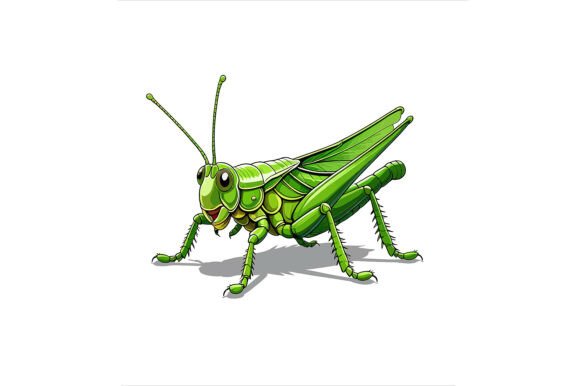
Vector Art of a Green Grasshopper: A Practical Guide to Format, Flexibility, and Design Application
In the realm of digital design, the choice of asset format often dictates the longevity and versatility of a project. When evaluating resources for nature-themed branding, educational materials, or apparel, the Vector Art of a Green Grasshopper stands out as a specific solution that addresses common scalability issues. Unlike standard raster images, which degrade when enlarged, this vector illustration maintains crisp edges and clean lines regardless of size. For designers and creators seeking a balance between aesthetic appeal and technical utility, understanding the nuances of this specific asset is essential before committing to a purchase or download.
Defining the Asset: What Makes Vector Distinct?
The primary distinction of the Vector Art of a Green Grasshopper lies in its mathematical construction. While a photograph or a PNG file relies on a fixed grid of pixels, a vector file uses paths defined by points, curves, and angles. This fundamental difference means that the green grasshopper illustration can be resized from a tiny favicon to a massive billboard without any loss of resolution. The "green" aspect of the subject matter is not merely a color choice but a design element that can be manipulated. Because the colors are defined by code rather than pixel data, a designer can instantly shift the hue from a vibrant lime to a muted olive to match a specific brand palette.
This flexibility is encapsulated in the EPS (Encapsulated PostScript) format typically included with such assets. The EPS file serves as the master editable version, allowing users to open the artwork in professional software like Adobe Illustrator or CorelDRAW. Here, every leg, wing, and eye of the grasshopper exists as an independent object. This level of control is crucial for projects requiring customization, such as adjusting the pose slightly or removing background elements to create a transparent logo. In contrast, a JPEG version, while convenient for quick previews or low-resolution web use, locks the image into a static state where individual elements cannot be separated or recolored.
Comparing Formats: Vector vs. Raster Alternatives
When deciding whether to utilize the Vector Art of a Green Grasshopper, it is necessary to compare it against the more ubiquitous raster formats. Raster images, including JPGs, PNGs, and TIFFs, are excellent for complex photographic realism. If a project requires the texture of actual insect skin or a realistic environmental background, a high-resolution photograph might be superior. However, for graphic design applications where clarity and stylization are paramount, vectors hold a significant advantage.
Consider a scenario where a client needs a grasshopper logo for a new eco-friendly startup. If the designer chooses a raster image, they must anticipate every possible size requirement upfront. If the logo later needs to be printed on a truck wrap, the original raster file may appear pixelated or blurry upon enlargement. The vector alternative eliminates this risk entirely. Furthermore, regarding file size, vector files are often smaller than their high-resolution raster counterparts because they store instructions rather than millions of color data points. This efficiency benefits web performance and storage management.
However, there are tradeoffs. Vector art requires specific software to edit. A user who only has access to basic photo editors like MS Paint or simple mobile apps will find the EPS file difficult to manipulate. In these cases, the included high-resolution JPEG provides a functional fallback. It offers a ready-to-use option for quick social media posts or internal presentations where deep editing is unnecessary. The decision, therefore, rests on the intended workflow: if the goal is long-term adaptability, the vector format is indispensable; if the goal is immediate, one-time use, the raster version may suffice.
Evaluating Use Cases: Where Does This Asset Fit Best?
The versatility of the Vector Art of a Green Grasshopper makes it suitable for a wide array of applications, yet it excels most in specific categories. One of the strongest use cases is print-on-demand (POD) merchandise. Platforms that produce t-shirts, mugs, and tote bags require high-quality source files to ensure the final product looks sharp. Using a vector file ensures that the print head captures every detail of the grasshopper's anatomy, resulting in a professional finish that resists fading or cracking over time.
Another critical area is educational material creation. Teachers and curriculum developers often need clear, scalable illustrations for worksheets, flashcards, and textbooks. The ability to resize the grasshopper without losing quality allows these materials to be formatted for various paper sizes, from small handouts to large classroom posters. Additionally, the editable nature of the file allows educators to add text labels directly onto the vector layers, creating interactive diagrams that would be cumbersome to assemble using static images.
For DIY crafting enthusiasts, the vector format opens doors to technologies like laser cutting and vinyl cutting machines. These devices interpret vector paths to cut shapes precisely from wood, acrylic, or adhesive vinyl. A raster image cannot be used for this purpose because the machine cannot distinguish the outline of the grasshopper from the background. Thus, for scrapbooking, wall art, and custom signage, the vector file transforms a digital image into a physical object with precision.
Decision Factors: Strengths, Limitations, and Tradeoffs
Before integrating the Vector Art of a Green Grasshopper into a project, creators should weigh several practical factors. The primary strength is undoubtedly scalability. Whether the output is a business card or a building wrap, the visual integrity remains constant. This reliability reduces the need for multiple versions of the same asset, streamlining the asset management process. Furthermore, the ability to change colors instantly saves hours of manual retouching work, making it highly efficient for branding campaigns that require color variations.
However, limitations do exist. The style of vector art is inherently graphic and stylized. It may not suit projects demanding photorealism. If a design brief calls for a hyper-realistic depiction of a grasshopper in a natural habitat, a vector illustration might appear too flat or cartoonish, regardless of how detailed the line work is. Additionally, the learning curve associated with vector software can be a barrier. Users unfamiliar with anchor points, bezier curves, and layer management may struggle to unlock the full potential of the EPS file, potentially leading to frustration or a suboptimal result.
Cost and time are also relevant considerations. While the initial acquisition of a vector file might involve a cost, the long-term value often outweighs the expense due to its reusability across different mediums. Conversely, hiring a photographer or commissioning a custom illustration for every single variation needed could become prohibitively expensive and time-consuming. The vector approach offers a middle ground: a professional, customizable asset that can be adapted quickly without the overhead of continuous production.
Strategic Selection: When to Choose Vector Over Other Options
Determining when the Vector Art of a Green Grasshopper is the right choice involves analyzing the project's lifecycle. If the design is intended for a short-term campaign with no plans for future adaptation, a high-quality raster image might be sufficient and easier to implement. However, for any project with a lifespan extending beyond a few months, or for brands that anticipate growth and expansion, the vector format is the prudent choice. It future-proofs the design, ensuring that the asset remains usable as technology and print standards evolve.
Furthermore, consider the complexity of the design requirements. If the project involves layering the grasshopper over various backgrounds, combining it with typography, or integrating it into a larger composition, the non-destructive editing capabilities of the vector file are invaluable. You can move parts of the grasshopper, hide elements, or adjust opacity without degrading the image quality. In contrast, manipulating a raster image often leads to compression artifacts and edge halos, which can detract from the overall professionalism of the work.
Ultimately, the decision hinges on the balance between immediate convenience and long-term flexibility. The inclusion of both an EPS file and a high-resolution JPEG in the package addresses both needs. The JPEG allows for rapid deployment in situations where speed is the priority, while the EPS file serves as the robust foundation for professional, scalable design work. By understanding these distinctions, designers and creators can make informed decisions that align with their specific goals, ensuring that the chosen asset enhances rather than hinders their creative vision.